
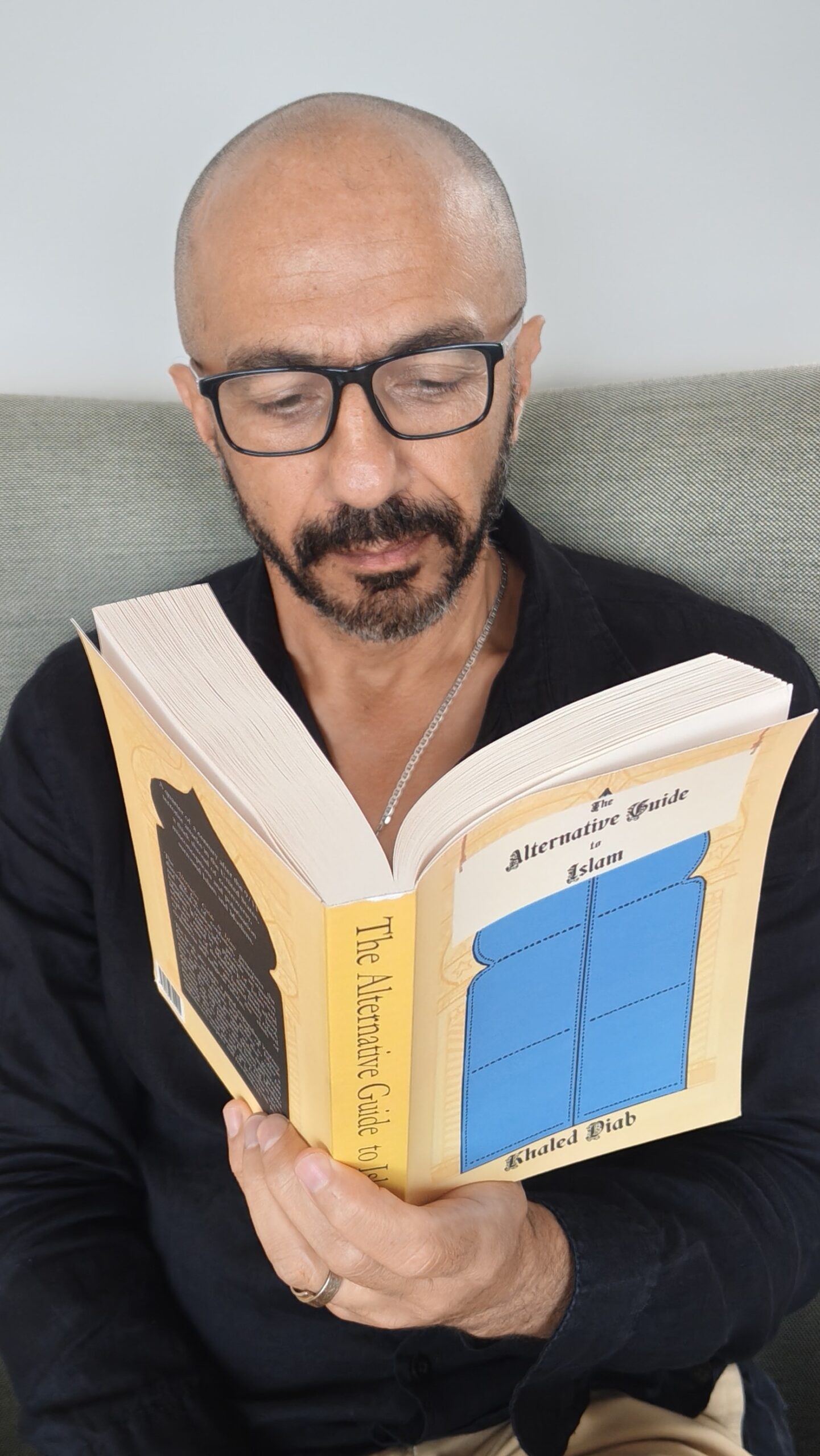
The Alternative Guide to Islam: Q&A with the author
In this Q&A with the author, Khaled Diab talks about The Alternative Guide to Islam, what it’s all about and how it goes off the beaten track to explore sex, sexuality, booze, unbelief and many other under-explored dimensions of Islam.
As the title suggests, the book is about Islam. But it is about Islam as a lived socioeconomic, cultural and political experience. It is not a theological work, though theology does feature where it is useful.
I wrote The Alternative Guide to Islam because I was alarmed by the troubling polemics, polarisation and hatred. In Europe and America, the level of Islamophobia is now reaching the levels it was at in the immediate wake of the 9/11 attacks. Many conservative Europeans and Americans are convinced that Islam is mounting a global jihad against the West and Christendom. Similarly, many conservative Muslims are convinced that the West is spearheading a crusade against Islam.
In truth, there is no “jihad” or “crusade” in progress, despite what some extremists may believe. The reality I see, as someone who is both Arab and European, is far more complex, nuanced and fascinating.
I wrote The Alternative Guide to Islam with a broad audience of non-Muslims and Muslims in mind. I employ humour, satire, storytelling and an engaging writing style to make the book as accessible as possible. The book also takes a thematic approach, with each chapter focusing on a particular theme or subject matter. This makes it easier for readers to dive straight into the subjects that most interest them.
More specifically, The Alternative Guide to Islam targets diverse groups of readers:
Impartial or sympathetic non-Muslims who wish to move beyond the polarised public debate and acquire an honest, in-depth picture of the reality beyond the headlines and soundbites
Anti-Muslim Europeans and Americans are also an important target, though harder to reach. The book not only challenges their prejudices and tackles the misinformation to which they have been exposed, it also provides those who are willing with the opportunity to gain a broader, more nuanced perspective.
Muslim secularists and reformers: In the pitch battle between extremists, Muslims or people with Muslim heritage who are secular, reform-minded, progressive and liberal are too often overlooked or ignored as their very existence challenges the extremist narrative and cause. The Alternative Guide to Islam is for and about such Muslims. There is even an entire chapter of atheists, sceptics and unbelievers.
Muslim conservatives: The book also addresses Muslim conservatives to dispel their misperceptions about the reality of their religion as a lived experience, to challenge their exclusionary ideas and narratives, and to invite them to think in more pluralistic and inclusive ways.
Books about Islam too often focus on abstract theological matters, are densely academic or are polemic in nature. Many books on Islam are partisan in nature, written by unapologetic Islamophobes or Islamophiles. When they do deal with the social, political, cultural, economic or historical reality, they often focus on one narrow aspect or dimension.
The Alternative Guide to Islam approaches the religion as it is lived and experienced by Muslims and non-Muslims. Unlike many books, it does not cover a chronological approach. Instead, it is divided into thematic chapters that deal with pertinent themes and/or surprising subjects or underappreciated subject matter. The book’s prose are readable and engaging. It centres human stories and narratives and uses those to illuminate the broader public debate.
The reason I use humour, especially satire, is because laughter can help build a kind of understanding that seriousness and serenity struggle with. In addition, some ideas out there are so out there that their ridiculousness can best be captured only through poking fun at them. Humour also helps make the text more readable and accessible.
Each chapter of The Alternative Guide to Islam begins with a satirical or humorous takedown of bigoted ideas related to the theme being explored. For example, the chapter on women mocks the conviction that Muslim women are “weak” and “submissive”, while the chapter on alcohol ridicules the idea that drinking is at the root of the Muslim world’s demise. After the fun prelude, the chapter than dives into the serious stuff, while still highlighting the fun and funny sides when the situation merits it.
Yes, I am an atheist but I grew up in a Muslim family and my parents raised me as a Muslim. So, in many ways, I am a cultural Muslim. I am also an Arab. Having partly grown up in the UK and lived in Belgium for much of my adult life, I am also European and I grew up in close proximity to Christian culture and rituals. I also spent years living in Jerusalem, which provided me with profound insights into Judaism.
This diversity enables me to explore the issues covered in The Alternative Guide to Islam empathetically, sympathetically, compassionately and from multiple perspectives. As an outside-insider and an inside-outsider, I am also well equipped to examine the situation and present an honest picture that is neither pro-Islamic apologia nor an anti-Muslim diatribe.
The culture, social reality and history of Islam also appeal to the writer, journalist and storyteller in me. And whether or not I believe or am interested in Islam, Islam and Islamophobia are interested in me, which gives me a personal stake in the heated public debate.
Many Europeans and Americans label me as a Muslim solely based on my name and Arab features. And even when I point out that I’m an atheist and secularist, some on the more paranoid end of the conservative spectrum don’t believe me and accuse me of dissimulation in order to deceive the “infidel” and spread the faith.
Many Muslims also regard me as a Muslim, and judge me accordingly, because I happened to be born to Muslim parents. For instance, in Egypt, where I’m originally from, my birth certificate and identity card identify me as a “Muslim”, without asking me consent beforehand. And changing that is almost impossible.
Divided into handy and useful thematic chapters, the book deals with the following main topics:
* What is Islam and the many forms of Islam
* Muslim women
* Muslim men
* Sex and sexuality
* Drinking and alcohol
* Prophets and messiahs, namely Jesus and Muhammad
* Culture wars: deconstructing and critiquing the clash of civilisations and introducing the mash of civilisations
* Sceptics, heretics, apostates and atheists in Islam and Muslim societies throughout the ages
* The question of whether or not Islam needs a “reformation”
* The future of Islam
Just as Islam is not a monolith, the media is also not monolithic. There are major differences in coverage between countries, media outlets and even individual journalists.
However, certain patterns can be discerned. The US media is generally more suspicious and stigmatising towards Muslims than the Western European media.
At the more progressive end of the western media spectrum, there is greater tolerance, acceptance, accuracy and honesty when it comes to coverage of Islam and Muslims. The more you move towards the conservative and right wing of the media, the greater the hostility, distrust and misinformation you see about Islam and Muslims.
In my view, a journalist’s mission should be to challenge prejudice, not pander to it. This requires journalists to question the biases around them, both conscious and unconscious, including their own. Although simplistic narratives may be more popular and easier to spread, they stoke polarisation and fuel hatred. It is essential that journalists of conscience provide their audiences with as full a picture of the complex reality as possible in the available space. I don’t believe that journalists should ignore the bad and the ugly, but when dealing with it, they need to highlight the human and show that there are alternative perspectives.
Common negative tropes in Europe and America, especially amongst conservatives and the far right, revolve around the notion that Muslims are mindless fanatics, violent extremists, anti-western traitors, and alien outsiders who share nothing in common with us. Too many on the right believe that Muslims are in the West for nefarious reasons: invaders who are out to conquer the West and convert it to Islam.
Negative tropes and stereotypes about Muslim men centre on how dangerous, misogynistic, hateful, repellent, extremist and religiously fanatical they are. Although Muslim men may be dangerous, they are not strong, as reflected in the popular Hollywood stereotype of the “reel bad Arab” who is no match for the brave American hero or heroine who forces them to surrender or die with cinematic ease.
In right-wing fantasies, the Muslim man is riddled with contradictory dualisms. He is a threat to the white, western man due to his charming, seductive almost effeminate but ultimately dishonest ways that lure the western woman into his honey trap. But the Muslim man is also a gauche, sexually frustrated, sexually repressed predator who is allegedly out to rape and pillage his way through western society.
Negative tropes about Muslim women tend to focus on their alleged weakness, submissiveness and anonymity, shrouded behind a veil and secluded behind walls. In these stereotypes, Muslim women are regarded as lacking agency: they are woeful and pitiful victims of Islamic misogyny and Muslim male dominance, suppression and repression. And because Muslim women lack strength and agency, they are in desperate need of western saviours to liberate them.
Although today Muslim women are often regarded as asexual and are desexualised, Muslim women were and continue to be to some extent the subject of western sexual fantasies, as reflected in the highly sexualised image of the harem.
These stereotypes leave little space for the reality of Muslim women who are feminists and liberated, fighting with their own agency for their own rights, or the fact that even conservative Muslim women are often strong and exercise agency.
Secularism and atheism are often seen as alien to Muslim societies and many dismiss them as western imports. However, Islamic societies have always had a secular, irreverent and irreligious sub-culture, from the very founding of the faith right down to the modern day. I wanted to do justice to this history and contemporary reality.
This also has resonance for me personally. People of Muslim heritage like me of little or no faith are regarded somehow as inauthentic and rendered largely invisible by conservative Muslim and non-Muslim bigots. But we are just as authentic and integral to our societies as the religious. I wanted to set the record straight on that.
I also want to provide support and succour to Muslims who have doubts or questions or have lost their faith or never had it. When I was embarking on my journey towards faithlessness, I was largely unaware of the long and rich history of secularist thought in Islam because it had been suppressed by the pious. I want others undergoing a similar journey to know that they are not alone.
The perception of Islam has shifted radically over time. When Europe and America were sexually prudish, they regarded Islamic societies as sexually licentious and permissive. Now that the West is more sexually liberated, it regards Islam as sexually repressive. A reverse process of perception occurred in Islamic societies. This partly reflects shifting realities but also the two religions’ tendency to project the opposite of their own self-image on to each other.
Historically, there was a sexual openness in Islamic societies that has vanished in many places today, from explicitly and proudly homoerotic poetry to sex manuals written by Islamic scholars.
Today, Muslim-majority societies generally lag behind European societies when it comes to sexual liberty. And some places are downright repressive. However, there are also places where sexual freedom exists or where a sexual revolution is in motion.
Because the clash of civilisations doesn’t actually exist in the real world, except in the perceptions of extremists and opportunists. It is just a rehashing of centuries-old tropes dressed up in modern terminology. There is no monumental clash between a monolithic Islam and an equally monolithic West or Christendom. This is highlighted by the regular alliances between Muslim and Christian powers, the regular clashes within each of these supposedly distinct civilisations, and the mash of civilisations I mentioned earlier.
The ‘mash of civilisations’ is a term I coined as an antidote to the hostile framing of the clash of civilisations. It highlights the many ways that Muslim-majority and Christian-majority societies have influenced and shaped each other, and the common roots they share, culturally, socially, philosophically and theologically.
I wrote a chapter on alcohol in Islamic societies because this is an aspect that is widely misunderstood not only by non-Muslims but also by many Muslims. It was also just fun to research and write.
Drinking may be haram, but it has always been an important subculture. It lurks throughout Islamic history like a tipsy uncle at a family gathering who embarrasses the guests by talking about the drunken indiscretions of the household.
Drinking is so hard-wired into Islamic culture that there is an entire genre of poetry dedicated to it. Muslims also not only gave us the word alcohol but also gifted the world distilled spirits, such as “araq” in Arabic. Without Muslim chemists, we would not have our whiskeys, vodkas and tequilas. Not bad for a supposedly teetotalling culture.
Where to order
Amazon
Author
-
 View all posts
Khaled Diab is an award-winning journalist, blogger and writer who has been based in Tunis, Jerusalem, Brussels, Geneva and Cairo. He calls the scenic Belgian town of Ghent home. Khaled also gives talks and is regularly interviewed by the print and audiovisual media.
Khaled Diab is the author of three books: The Alternative Guide to Islam (2026), Islam for the Politically Incorrect (2017) and Intimate Enemies: Living with Israelis and Palestinians in the Holy Land (2014). In 2014, the Anna Lindh Foundation awarded Khaled its Mediterranean Journalist Award in the press category. This website, The Chronikler, won the 2012 Best of the Blogs (BOBs) for the best English-language blog. Khaled was longlisted for the Orwell journalism prize in 2020. In addition, Khaled has worked in the environmental sector, including as the communications director for a climate NGO based in Brussels. He has also worked as a communications consultant to intergovernmental organisations, such as the EU and the UN, as well as civil society. Khaled lives with his beautiful and brilliant wife, Katleen, who works in humanitarian aid. The foursome is completed by Iskander, their smart, creative and artistic son, and Sky, their mischievous and footballing cat. Egyptian by birth, Khaled’s life has been divided between the Middle East and Europe. He grew up in Egypt and the UK, and has lived in Belgium, on and off, since 2001. He holds dual Egyptian-Belgian nationality.

One Comment