The clash within civilisations

 
VN:F [1.9.22_1171]
Rating: 0 (from 0 votes)
VN:F [1.9.22_1171]
Rating: 0.0/10 (0 votes cast)

This year marks the 20th anniversary of the clash of civilizations theory, but Samuel P Huntington was wrong.

Thursday 28 March 2013

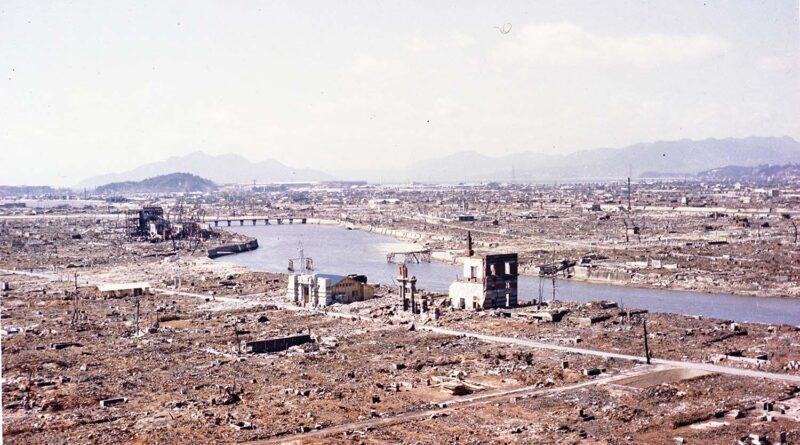
A decade has passed since the blood-drenched invasion of Iraq began, unleashing a wave of destruction not seen in that part of the world since at least the Mongol sacking of Baghdad in the mid-13th century.

Unsurprisingly, the 10th anniversary has prompted immense media attention, in the United States and Europe, as well as in Iraq itself and the broader Middle East. In light of the carnage that has ensued following that fateful decision to invade, a lot of the public debate has focused on whether the war was justified and worthwhile.

The cheerleaders of the war argue that the invasion was just, the subsequent carnage was an unfortunate but collateral consequence of a benign act of goodwill, and that errors were made in the execution of the campaign but the principle was essentially sound.

Critics, like myself, see the wholesale destruction of Iraq and the chaos besetting it – which was chillingly illustrated by the deadly car bombings which rocked Baghdad on the 10th anniversary – as clear proof that the US-led intervention was not only unjustified but flawed.

In order to understand why, we need to rewind another 10 years, back to another important anniversary which has largely fallen under the media’s radar. Through some fluke of history, the theory which largely justified the Iraq war and provided it with its ideological underpinning was formulated exactly a decade earlier.

In an incredibly influential essay published 20 years ago in Foreign Affairs, the late Samuel P Huntington first outlined his clash of civilisations theory, which he later elaborated on and fleshed out in a book published in 1996.

Huntington argued that “the fundamental source of conflict” in the post-Cold War era would be not ideological or economic but “cultural”. “The clash of civilisations will dominate global politics. The fault lines between civilisations will be the battle lines of the future,” the Harvard professor argued.

Huntington divided the world into some half a dozen major civilisational groups which, he posited, would clash at two levels: local “fault line conflicts” where civilisations overlap and “core state conflicts” between the major states of different civilisations.

On the 20th anniversary of this controversial theory and given how influential it has been and remains, it is useful to analyse whether or not Huntington was right. Has a clash of civilisations emerged, as Huntington predicted, over the past two decades?

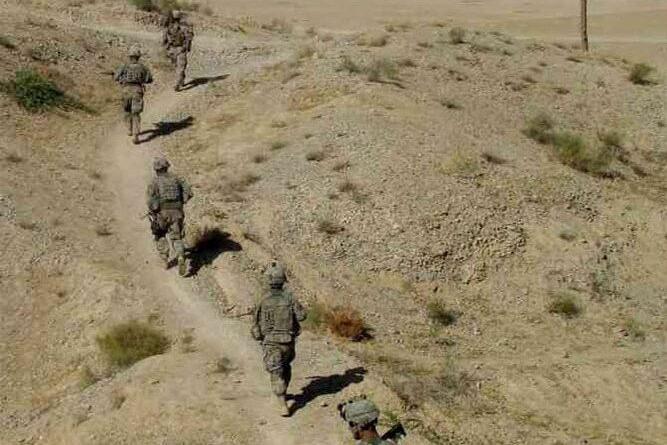
Supporters of Huntington’s hypothesis answer with an unequivocal “yes”. They point to the inhumane atrocities committed in the United States by Islamic extremists on 11 September 2001, the subsequent clash with al-Qaeda, the wars in Afghanistan and Iraq, as well as the rise of Islamist parties during the “Arab Spring” as confirmation that a clash is underway.

Critics, like the scholar Noam Chomsky, have maintained that the clash of civilisations is simply the symptom of an empire, i.e. Pax Americana, in search of another justification for its imperial aspirations after the Cold War paradigm fell apart with the collapse of the Soviet bloc.

The late Edward Said, the renowned author of Orientalism, saw in Huntington’s theory an extension of the pseudo-scientific Orientalist scholarship which had been used for at least a couple of centuries to justify European and Western hegemony. In an essay entitled The Clash of Ignorances¸ published shortly after 9/11, Said argued that Huntington ignored “the internal dynamics and plurality of every civilisation” and “the fact that the major contest in most modern cultures concerns the definition or interpretation of each culture”.

Personally, I find that, though the idea, in one form or another, of a clash of civilisations is as old as the hills – examples include the historical notions of jihads and crusades, not to mention the idea of “civilisation” versus “barbarity” espoused by most dominant powers throughout the centuries – this does not make it any more valid or true.

Far more often than not, what has been dressed up as a clash of values is really just a clash of interests parading as something less selfish than it actually is. Although culture and ideology can, on rare occasions, lead to conflict, for the most part, societies enter into conflicts due to clashes of interests.

And in such a context, proximity is traditionally a far greater cause of friction than culture. That is why conflicts within self-identified cultural or civilisational groups are often greater than those between them. Over the centuries, Christians and Muslims have gone to war and killed more of their coreligionists than each other, as the carnage of two world wars in Europe shows all too clearly.

That would explain, for instance, why the United States decided to invade Saddam Hussein’s secular Iraq, even though it was a sworn enemy of al-Qaeda and jihadist Islam, yet is bosom buddies with Saudi Arabia, the hotbed of reactionary Wahhabism, which it exports around the region and the world, and the home of most of the hijackers who took part in the 11 September attacks.

And alliances which cut across supposed civilisational lines have an ancient pedigree. Examples include the Arabs allying themselves with the British and the French against the Turks, or the Ottomans fighting alongside the Germans in World War I against the British, French and Russians. In fact, throughout its centuries as a major power, the Ottoman Empire’s alliances shifted between various Christian European states, including France, Poland, as well as the Protestant Reformation against the Catholic House of Habsburg.

Moreover, Huntington’s hypothesis is further undermined by what I like to call the “mash of civilisations”. Each so-called civilisation is actually a volatile, constantly changing hybrid of ideas and cultural influences.

In fact, if we must group civilisations together, then I would place the West and Islam in the same group because they both share common roots in the Abrahamic tradition, not to mention the Greek and Hellenistic, Mesopotamian and Egyptian influences, as well as the modern importance of the Enlightenment, not just for Western reform movements but also for secularising and modernising movements in the Middle East. I would go so far as to say that Europe and the Middle East, especially the Mediterranean countries, have more in common with each other than they do with their co-religionists in Africa and further east in Asia.

So, if there has not been a clash of civilisations, what has emerged since the end of the Cold War?

At one level, there are the brewing clashes of interests between the great powers, as America tries to hold on to its waning global reach, Russia tries to claw back the influence it lost following the implosion of the Soviet Union and China, after years of quiet growth in the background, begins to flex its muscles on the foreign stage, both to advance its emerging “strategic interests” and for prestige.

On another level, cultures have clashed, but not between civilisations, as Huntington believed they would, but within them. This clash within civilisations is currently playing itself out most visibly in the Middle East.

In addition to the sectarian monster unleashed by the anarchy in Iraq, the revolutionary wave that has swept through the region has brought to the fore, and into sharp relief, the major fault lines and clashes within each society and, to a lesser extent, between them. There are the conflicts between the secular and religious, between majorities and minorities, between women and men, between the young and old, between modernists and traditionalists, between the haves and have-nots, and so on.

Although less pronounced, at least for the time being, these same internal tensions are being witnessed in the West, as reflected in the rising influence of Christian fundamentalism in the United States and the extreme right in Europe, as well as the large-scale social protests, from years of street battles in Greece to the Occupy Wall Street movement of the “99%”.

In Europe, particularly, class conflict is intensifying on the back of the economic crisis triggered by neo-liberal excess, as the poor and middle-classes are forced, through bailouts and austerity, to finance what has effectively become a welfare state for the rich. This is putting in jeopardy not only the much-vaunted European social model but also the EU enterprise itself.

If the European Union is not reinvented along more equitable lines and emerges out of this crisis, instead, much weakened, then it will likely leave a petty-nationalistic sized hole in the European arena which could eventually cause the conflicts currently taking place within individual countries to spill across borders.

In the second decade of the 21st century, a major challenge facing us all is not the clash of civilisations but the clash within civilisations. This internal cultural struggle is largely caused by the growing socio-economic inequalities that have emerged in just about every country in the world.

If these inequities are not addressed effectively, at both the local and global levels, then intolerance will grow and conflicts will continue to consume individual societies, with the danger that they will spill over into other countries, potentially spiraling out of control.

___

Follow Khaled Diab on Twitter.

This article first appeared in The Huffington Post on 21 March 2013.

VN:F [1.9.22_1171]
Rating: 0.0/10 (0 votes cast)
VN:F [1.9.22_1171]
Rating: 0 (from 0 votes)
Tags: , , , , , , , , , , , , , , , , , , , , , , , , , , , , , , , ,

Related posts

Spartan Olympics

 
VN:F [1.9.22_1171]
Rating: 0 (from 0 votes)
VN:F [1.9.22_1171]
Rating: 0.0/10 (0 votes cast)

By Khaled Diab

In an era of economic austerity, we must revive the idea of a permanent venue for the Olympics, which would also help to de-politicise the games.

Tuesday 7 August 2012

The Olympics have sometimes been used as a podium for shameless propaganda. Image: okänd

The London Olympics have been an entertaining spectacle and, as usual, a thrilling sight of sporting prowess, enabling largely harmless shows of patriotism, as fans cheer on their national stars, often in some of the world’s most obscure sports.

But this carnival carries an exorbitant price tag. Although the UK government has announced that the 2012 games will cost the taxpayer less than initially advertised, the final cost will still be an astronomical £9 billion ($14 billion). At a time of severe austerity, high youth unemployment and dramatic insider bank heists, it is welcome news that the Olympics in London will cost less than half of the Beijing games.

Nevertheless, this is an enormous cost for what, judging by previous experience, is an investment in disposable infrastructure that, like in Athens and Barcelona, usually lies abandoned and decaying for years as a monument to modern excess.

Given the amount of scarce resources the games require, organisers and their supporters have for years sought to deflect criticism by talking up the regenerative power of the games on deprived urban areas and the economic dividend the raised profile delivers the host city. But research suggests that both these claims are tenuous at best.

So that leaves national prestige and/or vanity. While there is nothing wrong with channelling nationalism into the often harmless avenue of sport and people seizing the chance for some good-humoured flag waving, but it is the taking part that should matter, not the hosting.

Besides, sporting nationalism is not always harmless or good-humoured. In fact, the Olympics have sometimes been used a podium for shameless propaganda. The most notable case was the 1936 games in Nazi Berlin. The silver lining was the sportsmanship exhibited by German athlete Luz Long who helped the African-American athlete Jesse Owens to win the long jump – a poignant gesture of subversion against Nazi race politics and American racial segregation.

In the West, the Beijing Olympics were also rightly criticised as an attempt by the Chinese authorities to whitewash the country’s poor human rights record, democratic deficit and the Tibetan question, not to mention the separatist rebellion in Xinjiang which flared up shortly before the games.

But despite its self-image, the West is not above playing such political games, and the London Olympics can be seen partly as a propaganda exercise to try to repair the damage to Britain’s image abroad caused by its bloody military misadventures of the past decade. Ironically, the United States led a boycott of the 1980 Moscow Olympics to protest the Soviet Unions 1979 invasion of Afghanistan, yet no one has spearheaded a similar boycott against the UK for taking part in the US-led invasion of Afghanistan. British double-standards here are not as blatant as America’s, given that the UK did allow its athletes who wanted to compete to go to Moscow.

So how can we both reduce the cost of the Olympics and abolish the political track and field side events?

The answer is, symbolically speaking, to make the games less Olympian and more Spartan, by re-establishing the ancient idea of a permanent neutral venue for the Olympics. This would not only depoliticise the hosting of the Olympics, but would also slash costs dramatically and ensure the efficient reuse of infrastructure.

Finding an appropriate location would not be easy. Olympia in Greece would certainly have a powerful symbolic advantage, but some of Greece’s neighbouring rivals might object.

To avoid the political wrangling that would inevitably arise in deciding where to locate a permanent Olympic venue, the International Olympic Committee could invite interested countries to bid a tiny part of their country which would be declared, rather like the UN headquarters, neutral international territory.

The different sites would be put up for an international vote and the selected one would immediately become a non-political international zone. In addition, an international fund would be set up to construct a fully-equipped Olympic city with all the necessary sporting facilities and accommodation.

Of course, though this would save a bundle in cash, it will not entirely de-politicise the Olympics since the games will remain an outlet for petty nationalism and flag waving. But it will allow a purer expression of the Olympic ideal: it seeks to make of sport an arena where countries can cast aside their political differences and build understanding through friendly competition.

VN:F [1.9.22_1171]
Rating: 0.0/10 (0 votes cast)
VN:F [1.9.22_1171]
Rating: 0 (from 0 votes)
Tags: , , , , , , , , , , , ,

Related posts

Are we now ‘friends’ of al-Qaeda in Libya?

 
VN:F [1.9.22_1171]
Rating: +1 (from 1 vote)
VN:F [1.9.22_1171]
Rating: 7.0/10 (3 votes cast)

By Badra Djait

Belgium was one of the ‘Friends of Libya’ in Paris. But does the prime minister realise that these Libyan ‘friends’ include a former al-Qaeda fighter?

Wednesday 14 September 2011

Belgium’s acting prime minister, Yves Leterme (CD&V), represented the country at the ‘Friends of Libya‘ summit which took place in Paris on 1 September. The National Transitional Council of Libya, a political  body representing the anti-Gaddafi rebels, also took part in the gathering.

But can Leterme, in the name of Belgium, befriend a certain Abdelhakim Belhadj, who is  not only the Transitional Council’s military commander but is also a former al-Qaeda fighter and the former leader of the  Libyan Islamic Fighting Group (LIFG)?

“From holy warrior to hero of a revolution,” read the sarcastic headline in the London-based al-sharq al-Awsat sarcastisch.

Against the Soviets

 In 1988, Belhadj moved to Afghanistan to take part in the anti-Soviet jihad there. In 1990, the returning Libyan mujahideen set up LIFG. Belhadj was the former emir of this group which has been defined as a “terrorist” organisation since the 11 September 2001 attacks in America.

In 2004, Belhadj was arrested in Afghanistan, interrogated by the CIA and delivered to Libya, where he was eventually released in 2008. Earlier this year, he seized the opportunity to transform his defunct fundamentalist party into the Libyan Islamic Movement, which became one of the main opponents of the deposed Libyan leader Muammar Gaddafi. In this capacity, he became the military commander of the Transitional Council.

Meanwhile, rumours have been circulating that Gaddafi has fled to neighbouring Algeria. A convoy of six Mercedes with tainted glass was seen crossing the border. A number of Libyan rebel leaders accuse Algeria of supporting Gaddafi. Algeria denies the allegations.

Until now, Algeria has refused to recognise the Transitional Council until it receives assurances that the new Libyan government will co-operate in combating al-Qaeda in North Africa. Why has Belgium not taken a similar stance?

In contrast with Libya, Bahrain and Syria will not be on the receiving end of a military intervention from NATO, the UN or any other international coalition, in the name of democracy, human rights or the “responsibility to protect”.

Syria has a mutual defence pact with Iran (renewed in 2006 and 2009). This means that an attack against Syria would constitute an attack on Iran. And didn’t China and Russia recently warn that attacking Iran could trigger a world war?

Why are the popular democratic protests in Bahrain, the neighbour of Western ally Saudi Arabia, not appreciated? More importantly, why were the elite Saudi troops sent to crush the uprising in Bahrain trained by Great Britain? It was confirmed in the British parliament that the Saudi National Guard was taught how to “maintain public order”.

Reconstruction

The West has declared its official commitment to help build democracy in Libya. Restoring security, improving the humanitarian situation and the establishment of a multi-party, pluralistic political system are officially the top priorities. But Mustafa Abdul Jalil, head of the National Transitional Council, knows better what it is all about. He promised, in a statement, to grease the palms of the the countries which helped Libya in the fight against Colonel Gaddafi with lucrative oil contracts. Libyan oil is highly sought after for its high quality which, among other things, makes it ideal for the production of kerosine, which is often used as jet fuel.

 A number of countries, including Britain and Germany, have promised to release tens of billions of dollars in frozen Libyan assets to the Transitional Council. Other countries which did not immediately take part in the military intervention – such as Brazil, China and Russia – are hoping to get a second chance with the transitional government.

But the question for now is whether the “friends of Libya” will co-operate with a former al-Qaeda fighter in order to acquire those lucrative oil contracts?


This column is based on an editorial published, in Dutch, by De Morgen, on 30 August 2011. Published here with the author’s consent.


VN:F [1.9.22_1171]
Rating: 7.0/10 (3 votes cast)
VN:F [1.9.22_1171]
Rating: +1 (from 1 vote)
Tags: , , , , , , , , , , , , , , , , , , , , , , , , , , , , , ,

Related posts

9/12: Turning over a new leaf in the Middle East

 
VN:F [1.9.22_1171]
Rating: 0 (from 0 votes)
VN:F [1.9.22_1171]
Rating: 5.5/10 (2 votes cast)

By Khaled Diab

On the 10th anniversary of the day after 9/11, it is high time to trash the ‘clash of civilisations’ theory and the ‘war on terror’ and start a new chapter in the West’s relationship with the new Middle East.

Monday 12 September 2011

Most people recall vividly where they were on 11 September 2001, when four passenger jets were hijacked and used as highly effective targeted missiles, bringing down the World Trade Centre’s ‘twin towers’ in New York and damaging the Pentagon in Washington. In all, nearly 3,000 people were killed, making this the most devastating terrorist attack ever on American soil.

Sadly, the massive outpouring of global sympathy, support and solidarity – with people around the world saying “We are all Americans now” – was to prove short-lived, especially in Arab and Muslim countries, as the Bush administration and its neo-conservative allies hijacked this monumental tragedy to serve their own narrow interests.

After apparently taking a break for over a decade, following Francis Fukuyama’s confident assertion that history had ended with the collapse of communism in 1989, history re-awoke on 9/12, to an apparently monumental ‘clash of civilisations’ – despite the abundant evidence that most clashes are those of interests and that ‘civilisations’ more often clash within their civilisational group than outside it – which pitted the enlightened West against the benighted forces of Islam(ism).

Equipped with a brand new enemy to replace the ‘reds under the bed’, Washington declared its ‘war on terror’ to hunt down those baddie Jihadis and launched a raft of initiatives to civilise the Muslim world.

Providing strong evidence of where the administration’s actual priorities lay, hours after the attacks, then Defence Secretary Donald Rumsfeld was already going out of his way to link the atrocity to Iraq, despite the secular nature of Baghdad’s Ba’ath regime and the mutual hatred between Saddam Hussein and Osama Bin Laden.

Washington’s democratising and civilising mission focused mainly on invading and bombing to smithereens two countries: first Afghanistan (in October 2001) and then Iraq (in March 2003), not to mention the more recent involvement in Pakistan.

Despite at least a quarter of a million deaths and up to $4 trillion in costs to the US tax payer,  the decade-old war on terror has resulted in little but death, destruction and destitution, particularly in Iraq which was once one of the most developed and prosperous countries in the Middle East.

The true gains for freedom and democracy in the Middle East have been delivered – as critics of the War on Terror have long been arguing – by the peoples concerned themselves, as demonstrated by the ongoing Arab Spring or Arab Awakening.

In fact, the Arab revolutions undermine many of the assumptions underpinning the US approach over the past decade, even under the Obama administration which took over many of its predecessor’s policies, namely that liberty and liberal values could be imposed from outside by a paternalistic West, that freedom is synonymous with free markets, and that democracy and free markets automatically bring greater prosperity and rights to the masses. Another shattered myth is that the United State is a benign power operating for the greater good and not out of the narrow self-interest of its economic and political elite at the expense not only of hundreds of millions around the world but also of ordinary Americans who have been left with a near-bankrupt system, as the recent “default crisis” frighteningly illustrated.

For the Arab revolutionary wave to succeed requires not only that Arabs successfully redefine and reinvent their relationship with those that govern them but also that the relationship between Arab, not to mention other developing, countries with the West and the wealthy industrialised nations.

Although the Arab uprisings are against dictatorship and despotism, they are also against the dictates of Western hegemony and have an economic bottom line. They are part and parcel of a global backlash against growing inequalities triggered by neo-liberal economics and the increasing economic marginalisation of the young.

Tackling this not only requires deep domestic economic reform by Arab regimes but also the reinvention and reconfiguration of the global economic order – which is currently skewed towards the interests of he West, other OECD countries and, increasingly, the emerging might of China and a few other heavy hitters in the developing world – to make it fairer and more equitable.

If the second decade following the 9/11 attacks is to be a brighter one, then Washington and its Western allies need to abandon their paternalistic approach to the Middle East, see the region as more than the sum of its oil wells and allow its people to gain their fair share of the global economic pie.

But with a major energy crisis on the horizon and with Western economies on the verge of bankruptcy, not to mention massive global and regional overpopulation, there are troubling signs that the wrong lessons will be drawn from the first post-9/11 decade. But here’s to hoping that enlightened self-interest will win out over destructive selfishness.

VN:F [1.9.22_1171]
Rating: 5.5/10 (2 votes cast)
VN:F [1.9.22_1171]
Rating: 0 (from 0 votes)
Tags: , , , , , , , , , , , , , , , , , , , , , , , , , , ,

Related posts

David Miliband: revolution v extremism

 
VN:F [1.9.22_1171]
Rating: 0 (from 0 votes)
VN:F [1.9.22_1171]
Rating: 9.5/10 (2 votes cast)

By Osama Diab

Britain’s former foreign minister David Miliband has high hopes for the Arab revolutions.

Wednesday 27 July 2011

David Miliband is not just the former British foreign minister, but is also a man who is genuinely interested and highly opinionated on issues relating to terrorism, political Islam, the Arab-Israeli conflict and the Arab revolts. As Britain’s foreign secretary at just 41, Miliband has been a strong critic of the so-called War on Terror and also called for a “coalition of consent” with the “Muslim World” in which Britain’s foreign policy should focus on building relations with Muslim societies, rather than with regimes that are unpopular among their people.

He has also been a strong advocate of a Palestinian state and listed “Israeli government to freeze settlements and accept a Palestinian state based on 1967 borders” as one of the prerequisites to peace in the Middle East in 2009, during his time as the man in charge of Britain’s international relations.

From his office overlooking the nearly thousand-year-old Palace of Westminster, I tried to gauge as much as I could David Miliband’s opinions on the major issues facing the world today.

Knowing that my time in his office was limited, I was prepared for the interview to be short, possibly cold and to the point, without taking offence. However, Miliband unexpectedly started by jokingly requesting to be asked a question about Ahmed al-Muhammadi, an Egyptian footballer recently signed by Sunderland Football Club, which Miliband vice chairs. Even though his joke took a few minutes of the time I was allocated, it gave a much-needed charm ahead of the yet-to-be-discussed critical issues related to the emergence of Arab democracy, Arab revolts and how it might impact the Israeli-Palestinian conflict, the killing of Osama Bin Laden and the decade following the 9/11 attacks.

The world 10 years after 9/11

You famously said before that there are circumstance in which terrorism is justifiable, what, in your opinion, are these circumstances?

DM: That isn’t quite right. I was asked whether the actions of the African National Congress in the 1970s and 1980s should be denounced as terrible acts and I said no because of the political system under which they were living. The question I was asked was specifically about apartheid South Africa.

So if people are denied political avenues, is it justifiable for them to act violently?

DM: I think the classic case for Europeans is always “if you were in France in 1942, would you have joined the French resistance?” and of course the answer is “yes”. But fortunately these circumstances don’t exist very often. I think the non-violence that has marked the Arab revolts has been very powerful.
It’s no secret that the 9/11 attacks did a lot of harm to the Muslim-West relations, and that also includes the relation between Muslim communities in the West and their societies. Ten years after the vicious attacks, does the tension caused by 9/11 still persist?

DM: The attacks on 9/11 were vicious. They killed Muslims, as well as Christians, Jews and people of no denomination. They were an abomination for people of all religions. I think that the 10-year anniversary of 9/11 which is now approaching is an important moment to take stock. I think one of the remarkable things about this country (the United Kingdom), which I know better than others, is that the last 10 years have not seen the tension and the hatred that maybe you are referring to. One of the remarkable things here after the 7 July 2005 bombing in London was to hear Muslim friends of mine say “look, we felt more British after this, not less British.” Now, one mustn’t avert one’s eye from the fact that there are tensions, there can be tensions, but often they exist over housing or economic issues more than international political issues. So I think one needs to be careful in saying that 9/11 was the cause of tension between the West and Muslims and the Arab world.

But the consequences of 9/11 were two wide-scale wars.

DM: A lot of people disagree with Afghanistan and Iraq, and disagreement doesn’t have to mean inter-religious tension as opposed to political debate. I think the prism from which the West is seen in many parts of the Arab world is obviously Israel and Palestine. That was not the justification that was used by al-Qaeda in 9/11, and it was obviously not the motivating factor on the streets of Egypt or the streets of Tunisia or anywhere else.

I think the remarkable thing about the Arab revolts is that they have been driven by domestic concerns. They were driven by the search for dignity and the search for national pride.

I think it’s been a very challenging decade. I call it “a decade of disorder”. But not only because of 9/11. It’s been a decade of financial crisis, it was a decade of shifting economic power between the West and emerging economies. A lot has been going on and I don’t think it’s right to just call it a decade of Muslim-Western tension.

You wrote before that “The call for a ‘war on terror’ was a call to arms, an attempt to build solidarity for a fight against a single shared enemy. But the foundation for solidarity between peoples and nations should be based not on who we are against, but on the idea of who we are and the values we share.” Was Osama bin Laden that single shared enemy, and what do you make of his killing?

DM: I think the War on Terror was announced after 9/11. It was a concept that went much further than the so-called “Axis of Evil”. I think it was a great mistake because it united a series of grievances under the al-Qaeda banner, which in a way played their game, so I think that the notion of a War on Terror was not well-founded because it aggrandised al-Qaeda in a way that is almost the opposite of what was needed. They were attempting to unite the Muslim world under a single revolutionary banner. The best strategy to take that on would’ve been to fragment and then deal with the concerns individually. I don’t support the notion of a War on Terror. I think that was not sensible. What I support is a notion of a drive against injustice.

In that light, do you consider the killing of Osama bin Laden a victory?

DM: I think the weakening of al-Qaeda, which has been done in a range of ways, some of them militarily but most of them were by Muslims rejecting al-Qaeda, is a very good thing for the whole world.

So do you think the killing of Bin Laden did weaken al-Qaeda?

DM: Yes, I do. I think that he was a symbol as well as a guiding mind, so in balance, of course, it weakens them. I am persuaded by scholars who write in the Arab and Muslim world that certainly after the bombing of a wedding in Jordan in 2005, there’s been a growing rejection of revolutionary jihad in the Muslim world, and an embrace of various forms of political Islam. I think that the notion of a “call to arms” has been rejected in favour of political engagement.

Some of the Arab uprisings were against leaders who were part of the War on Terror, such as Hosni Mubarak of Egypt and Abdallah Saleh of Yemen, but some were seen, especially by the West, as helping terrorism, such as Qaddafi and al-Assad. Do you think the “Arab Spring” and challenging Arab dictatorships would help contain extremism or maybe spread it?

DM: I think the first thing to say is that the authors of these revolts are Arabs not Westerners. These are Arab revolts, not Western-inspired or directed revolts. It was a call for personal dignity, a call for personal and national improvement, and in Egypt it was a call to restore national pride in a 6,000-year-old civilisation that seemed to be in decline in the Mubarak years.

So I think the best way to contain extremism is to include people in the political process. What you need is inclusive politics. President Mubarak lost legitimacy in the eyes of his own people. He lost legitimacy because of corruption, kleptocracy, broken promises and a lack of mandate. He lost legitimacy because he wasn’t listening and there seemed to be no national path for Egypt.

There’s no question that his lack of legitimacy corroded the reputation of the West. We were in alliance with someone who in the eyes of his own people had growing disrespect. Violent extremism needs to be taken on politically and in security terms. Societies have to defend themselves against violence, but the best way to do that is in alliance with an open political system.

There is always a fear of instability. But Indonesia, the most populous Muslim country in the world, now has a democratic government. Turkey, which is a rising power of 80 million people, has a version of political Islam which I don’t see as a danger to Turkey’s democracy; I actually see it as part of Turkey’s democracy.

People like me mustn’t be naïve and pretend that decades of repression and autocracy are overcome overnight, and that the path to stable orderly democratic rule within international norms is going to be smooth, but I think it is better than the alternative.

Now each country in the Middle East needs to find its own path to legitimate, accountable government and respect for the dignity of people. That does not mean that every country is going to be a liberal democracy overnight, but that is something the countries would have to chart in their own way, and the monarchies in the Arab world are in a different position from the republics. I think a country like Egypt seems to be set on a very clear democratic path even in the medium term. I am confident about that. What I would say to you is that stable democracies are about much more than just votes; they are about independent institutions and civil society: media, judiciary, academia, and business that are able to hold accountable the abuse of power.

What’s your assessment of how disastrous the Iraq and Afghanistan wars were for the UK’s foreign relations with Arab and Muslim countries and what were the challenges the wars raised for you as foreign minister?

DM: There were very profound challenges raised. I think that Britain’s relations with the Arab world was strong and respectful in my period as foreign minister. I think that there’s some shared challenges that we are working on. I think the Afghan war can only be ended by political settlement, and the Arab and the Muslim world need to be part of that.

The uneasy birth of Arab democracy
How is Libya different from Syria in the eyes of the NATO. In other words, why did they choose to interfere in Libya but not Syria, even though civilians are under an equal threat in both countries, if not more so in Syria?

DM: There is a pressing humanitarian need in both countries. But in Libya there was a military option with limited geostrategic dangers, whereas in Syria there isn’t a military option and the geostrategic dangers are high.

You called for the West to adopt a “Coalition of consent” approach with Middle Eastern countries, how would that play out if the people of Egypt, for example, choose to be governed by a form of government that is unpopular in the West, like what happened in Gaza when Hamas was elected in fair elections?

DM: I believe that you live and let live, until the assertion of someone else’s rights interfere with your rights, and that’s true in our personal relations. I respect your rights to live your life in the way you see fit until you try to interfere with my life as I see fit.

What applies to people also applies to nations. Nations should be able to decide how to govern themselves, but there need to be international norms to make sure that the way they [govern themselves] doesn’t interfere with someone else’s rights. In a crowded neighbourhood like the Middle East, that is especially important.

What would you have you done differently to the current foreign secretary in relation to the Arab revolutions if they happened during your time as the man in charge of Britain’s foreign policy?

DM: I’m not seeking to make partisan points. But what I think is very important about foreign policy around the world is that it’s multilateral not just bilateral and I think it’s got to be about more than commercial diplomacy; it’s got to be about the full range of political engagement. So I think that’s the sort of foreign policy I would like to run, and that’s the sort of foreign policy I will advocate.

Do you think the war in Libya will be as disastrous and lengthy as Iraq and Afghanistan?

DM: No. I don’t. I think Libya is a very different case. I think stalemate is better than slaughter, but It’s very important that the military arm and the political arm know what the other is doing. The decision of the Arab League to call for intervention in Libya was very significant in the West, but Arab countries need to take responsibility because Gaddafi was a problem for you as well.

Do you think democracy is more sustainable if driven by the people or imposed by foreign powers?

DM: It must be driven by the people. Sustainable solutions are always driven by a sense of ownership that people have of their own lives.

Do you think then the situation in Egypt or Tunisia is more promising than in Iraq?

DM: That’s obviously the case because it’s driven from below and driven by a sense of ownership. I think one has to be respectful of the difficulties that lie ahead. This is a long process not a short process. It involves building durable institutions, such as free media, independent judiciary, etc. I do personally think that next year the economic situation will be very important. Egypt needs productive investment. It needs wealth creation because it’s still got massive inequality – one of the legacies of the Mubarak years. But over the medium term, I am confident that Egypt is a country whose people can make their own way and make a positive contribution both for themselves and the wider Middle East.

Hopes for peace and a Palestinian state
The US threatened that it might stop its funding to the UN if the general assembly voted in favour of a Palestinian state in September. Do you think the US threat is legitimate?

DM: I think the current administration have made good faith attempts to further some shared goals in the Middle East, including a Palestinian state that live alongside Israel. I am a strong supporter of a two-state solution. I think Israel has the right to exist but I think Palestinians also have a right to a state. I think it’s very important for the whole international community to support something like that. So I don’t think that’s a time for talking about retribution, but that’s a time for talking about positive constructive engagement.

How do you think the political changes in the Middle East might affect the Israeli-Palestinian conflict or peace negotiations?

DM: I think Arab states with democratic mandates will be better able to advocate for the Palestinians. Egypt, as an Arab democracy, will be a far better ally of the Palestinians.

This article first appeared in al-Ahram Online on 22 July 2011. Republished here with the author’s consent. ©Osama Diab. All rights reserved.

VN:F [1.9.22_1171]
Rating: 9.5/10 (2 votes cast)
VN:F [1.9.22_1171]
Rating: 0 (from 0 votes)
Tags: , , , , , , , , , , , , , , , , , , , , , , , , , , , , , , , , , , , , , , , ,

Related posts

توجهات جديدة للنزاع العربي الإسرائيلي

 
VN:F [1.9.22_1171]
Rating: 0 (from 0 votes)
VN:F [1.9.22_1171]
Rating: 0.0/10 (0 votes cast)

بقلـم خالد دياب

تتجاوز القضية الأخلاقية لصالح زيادة التفاهم في أهميتها قضية انتهاك حقوق النشر، حسب رأي الصحفي خالد دياب، رداً على قرصنة ترجمة رواية مصرية مشهورة إلى العبرية

الاربعاء   ١٥   ديسمبر   ٢٠١٠

EN version

لا يعتبر علاء الأسواني مرشحاً محتملاً لمنصب مخلّص الرواية المصرية. إلا أن طبيب الأسنان هذا، الذي ما زال يمارس مهنته في عيادته في قلب العاصمة المصرية، يعتبر بشكل واسع أنه أنعش الرواية المصرية وزاد من مصداقيتها في الشارع المصري ضمن هذه العملية. ويعتبر الروائي المصري كذلك مشارك مفوّه في حملة تساند الديمقراطية. وقد كتب عدداً من المقالات عبر السنوات حول الحاجة الملّحة للإصلاح الديمقراطي في مصر وحول الفساد والجمود في نظام الرئيس مبارك.

تسطع فطنة الأسواني وعدم توقيره في مجموعة قصصه القصيرة وعنوانها “نيران صديقة”. ويشكّل عمله الأكثر شهرة “عمارة يعقوبيان” الذي نشر للمرة الأولى عام 2002 استكشافاً شجاعاً لواقع مصر الاجتماعي الاقتصادي البائس، بنتوءاته ومشاكله، كما يعبّر عنه سكان مجمع شقق متداعٍ ولكنه كان عريقاً في يوم من الأيام.

ورغم أن “عمارة يعقوبيان” تُرجمت إلى عشرين لغة على الأقل، إلا أن الأسواني قاوَم وبشدة وصلابة محاولات ترجمة روايته إلى لغة معينة هي العبرية، تضامناً مع مأساة الفلسطينيين وتعبيراً عن معارضته للـ “تطبيع الثقافي مع إسرائيل”.

قرر مركز إسرائيل فلسطين للبحوث والمعلومات مؤخراً، وبعكس رغبات الأسواني، وبهدف معلن هو “نشر الوعي الثقافي”، قرر نشر ترجمة غير مصرّح بها لرواية “عمارة يعقوبيان” على شكل صورة إلكترونية (pdf) وتوزيعها على قائمة عناوين تضم 27,000 مشترك.

استشاط الأسواني غضباً كما كان متوقعاً. هدد متهماً المركز بالسرقة والقرصنة، باتخاذ إجراءات قانونية. إلا أن غيرشون باسكن، رئيس ومؤسس مركز إسرائيل فلسطين للبحوث والمعلومات لم يتراجع. “لم تكن نيتنا انتهاك حقوقه في النشر” حسبما صرح لصحيفة هآارتس. “القضية هنا هي ما إذا كان حق الإسرائيليين بقراءة الكتاب يعتبر أهم من حقوق الأسواني للنشر”.

حسناً، من وجهة نظر قانونية وفكرية، فإن الإجابة على موقف باسكن هي “بالطبع لا”. إلا أن الناشر الناشط في مجال السلام والذي تحول إلى قرصان قد يكون على حق عندما يقول، كما أشارت وكالة الأسوشييتد برس “لنعطِ الجمهور الإسرائيلي اليهودي فرصة لفهم المجتمع العربي بصورة أفضل”.

ورغم أن الأسواني يقف على أرضية قانونية صلبة جداً، إلا أنني أشك بالقضية الإنسانية والأخلاقية وراء معارضته العامة لترجمة عبرية، ليس لمجرد أن باستطاعة الكتّاب اختيار أمور عديدة، ليس قرائهم واحد منها.

تثير عواطفي، مثلي مثل الأسواني، مأساة الفلسطينيين والصعوبات التي يعانون منها تحت الاحتلال. إلا أنني غير مقتنع أن الانخراط في مقاطعة ثقافية شاملة ضد إسرائيل هو أمر فاعل أو عادل أو ملتزم.

بداية، ليس الفلسطينيون العرب أو المسلمين الوحيدين الذين يناضلون نير احتلال أجنبي. خذ العراق وأفغانستان مثلاً، حيث يعاني السكان مثل الفلسطينيين على أقل تقدير، بل وبشكل أسوأ من حيث عدد الضحايا. أعلم تمام العلم من قراءتي لأعمدة الأسواني أنه غاضب جداً من الدمار الذي تتسبب به هذه الغزوات الأنجلو أمريكية. لماذا لم تترجم هذه النقمة إذن إلى رفض مماثل للسماح بنشر ترجمة إنجليزية للرواية؟

هناك نوع معين من التناقض الظاهري، على شكل ردة فعل مفاجئة، في أوساط مفكرين مصريين يعتبرون تقدميين في الأحوال العادية، وخاصة هؤلاء من الجيل الأقدم، الذين يتصرفون كديناصورات عندما يعود الأمر إلى إسرائيل، حيث يعلقون في معارك الأمس ويتمسكون بأفكار الأمس العتيقة الكارثية، ولكنهم على استعداد وقدرة على رؤية المجالات الرمادية والفروقات الدقيقة في أمريكا، رغم سجلّها التاريخي المدمّر أكثر في أنحاء العالم.

إذا كان الأسواني مهتماً بالدفاع عن القضية الفلسطينية فإن السماح للإسرائيليين بالقراءة عن العرب كبشر عاديين، بدلاً من الشياطين التي تطارد كوابيسهم، والتوصل إلى فهم معمق للمجتمع العربي، سيوفّر مساعدة أكبر بكثير وفائدة أعم، من مقاطعة راوحت مكانها منذ عقود بدون أثر ملموس. شخصياً، أنا مع مقاطعة انتقائية لمتطرفين معروفين. ولكن رفض التعامل مع جميع الإسرائيليين هو نوع من العقاب الجماعي ننتقد نحن العرب إسرائيل لممارسته ضد الفلسطينيين.

تكمن إحدى المشاكل في أن المفكرين الذين يتعاملون مع إسرائيل في مصر يوصَمون عادة بأنهم خونة باعوا القضية. إذا كان الأسواني قلق من أن يبدو وكأنه يستفيد شخصياً من التعامل مع إسرائيل بينما يعاني الفلسطينيون، فهو يستطيع دائماً التبرع بدخل النسخة العبرية من كتابه لجمعية خيرية فلسطينية.

واقع الأمر هو أنني كنت آمل أن الأسواني كان سيستخدم ابتكاريته ووضعه وشهرته وشجاعته التي لا يشك بها أحد لأن يفتح طريقاً جديداً للنخبة الفكرية المصرية وإنشاء حوار مع إسرائيليين (إضافة إلى فلسطينيين) ذوي عقليات مماثلة من المصلحين وناشطي السلام، بدلاً من البقاء عالقاً في سلبية عدم التصرف. سوف يثري دعم صوت مصري بارز كهذا المعتدلين الإسرائيليين ويُفشِل سلطة المتطرفين لتجنيد الدعم المبني على الرعب والذم وتشويه السمعة.

لست ساذجاً لأعتقد بأن العلم أقوى من البندقية، ولكن من المؤكد أن بإمكان الكلمة أن تثلم السيف.

مصدر المقال: خدمة الأرضية المشتركة الإخبارية، 29 تشرين الثاني/نوفمبر 2010

VN:F [1.9.22_1171]
Rating: 0.0/10 (0 votes cast)
VN:F [1.9.22_1171]
Rating: 0 (from 0 votes)
Tags: , , , , , , , , , , , , , ,

Related posts

Novel approaches to the Arab-Israeli conflict

 
VN:F [1.9.22_1171]
Rating: +2 (from 2 votes)
VN:F [1.9.22_1171]
Rating: 10.0/10 (1 vote cast)

By Khaled Diab

Despite infringing on the author’s copyright and wishes, the unauthorised Hebrew translation of a bestselling Egyptian novel highlights how the word can help blunt the sword.

25 November 2010

AR version

Alaa al-Aswany is an unlikely candidate for the job of saviour of the Egyptian novel. Yet this dentist, who continues to run his downtown practice in Cairo, is widely regarded as having revived the Egyptian novel and raised its street credibility in the process. The Egyptian novelist is also an outspoken pro-democracy campaigner and has written numerous articles over the years about the urgent need for democratic reform in Egypt and about the corruption and inertia of the Mubarak regime.

His irreverence and wit shine through in his novella and short story collection entitled Friendly Fire. His best-known work, The Yacoubian Building, first published in 2002, is a courageous exploration of Egypt’s grim socio-economic reality, warts and all, as expressed through the inhabitants of a declining but once-grand downtown apartment block.

Although The Yacoubian Building has been translated into at least 20 languages, al-Aswany has strenuously resisted attempts to translate his novel into one language in particular, Hebrew, in solidarity with the plight of the Palestinians and as an expression of his opposition to “cultural normalisation” with Israel.

Going against al-Aswany’s wishes, the Israel-Palestine Centre for Research and Information (IPCRI) recently decided, with the declared aim of “expanding cultural awareness”, to publish an unauthorised translation of The Yacoubian Building in pdf and distributed it to a mailing list of some 27,000 subscribers.

Al-Aswany was, predictably, livid. Accusing IPCRI of “piracy and theft”, he has threatened to take legal action. IPCRI’s head and founder, Gershon Baskin, is unrepentant. “We didn’t intend to infringe his copyright,” he told Israel’s Haaretz newspaper. “The question here is whether Israelis’ right to read the book outweighs his copyright.”

Well, from a legal and intellectual point of view, the answer to Baskin’s poser is “obviously not”. However, the peace-activist-turned-guerrilla-publisher does have a point when he says, as reported by AP: “Let’s give the Israeli Jewish public an opportunity to understand Arab society better.”

Although al-Aswany stands on very firm legal ground, I am doubtful about the human and moral case for his general opposition to a Hebrew translation, not least because writers can pick many things but one thing they can’t choose are their readers.

Like al-Aswany, I am moved by the plight of the Palestinians and the hardships they suffer under occupation. But I am not convinced that engaging in a blanket cultural boycott against Israel is effective, let alone fair or consistent.

For a start, Palestinians aren’t the only Arabs – or Muslims for that matter – struggling under the yoke of foreign occupation. Take Iraq and Afghanistan, where the populations are suffering at least as badly as the Palestinians, and worse in terms of body count. And I know, from my reading of Aswany’s columns, that he is outraged by the devastation wrought by these Anglo-American invasions. So why has this indignation not translated into a similar refusal to permit the release of an English version of his novel?

There is a certain paradoxical, knee-jerkism among many otherwise progressive Egyptian intellectuals, particularly those of the older generation, who behave like dinosaurs when it comes to Israel – stuck in yesterday’s battles, fixated on yesterday’s outdated and disastrous ideas – but are willing and able to see the greys and nuances in America, despite its far more destructive track record across the globe.

If al-Aswany is concerned about defending the Palestinian cause, surely allowing Israelis to read about Arabs as ordinary human beings – rather than the demons that haunt their nightmares – and gain an insight into Arab society is far more helpful and useful than a boycott that has lasted decades with no perceptible effect. Personally, I am all for a selective boycott of known extremists, but refusing to deal with all Israelis is the kind of collective punishment we Arabs criticise Israel for practising against the Palestinians.

One problem is that intellectuals who deal with Israel in Egypt are often branded as sell-outs and even traitors. If al-Aswany is worried about seeming to profit personally from dealing with Israel while the Palestinians suffer, he could always donate the proceeds from a Hebrew edition of his book to a Palestinian charity.

In fact, I would have hoped that al-Aswany would have used his creativity, stature, fame and undoubted courage to strike out in a new direction for Egypt’s mainstream intelligentsia and establish a dialogue with like-minded Israeli (not to mention Palestinian) reformers and peace activists, rather than remain stuck in negative inaction. Support from such a prominent Egyptian voice would empower Israeli moderates and undermine the power of extremists to mobilise support based on fear and vilification.

I am not naïve enough to believe that the pen is mightier than the gun, but the word can certainly blunt the sword.

This article first appeared in The Jerusalem Post on 21 November 2010. It was written for the Common Ground News Service.

VN:F [1.9.22_1171]
Rating: 10.0/10 (1 vote cast)
VN:F [1.9.22_1171]
Rating: +2 (from 2 votes)
Tags: , , , , , , , , , , , , , ,

Related posts

EU election monitoring… junket, joke or both?

 
VN:F [1.9.22_1171]
Rating: 0 (from 0 votes)
VN:F [1.9.22_1171]
Rating: 0.0/10 (0 votes cast)

By Christian Nielsen

“The Afghan elections were fair, but not free,” declared European election monitors. Meaningless sound-bite or what?


2 September 2009

What the hell was the European Union doing monitoring the recent Afghan elections when hardly anyone showed up to the EU’s own parliamentary elections earlier in the year? If it can’t motivate democracy at home, what makes the Union think it should join the circus of monitoring organisations in countries like Afghanistan?

The answer: part arrogance, part a widening foreign policy interest, and a good chunk of junketeering – where tens of EU officials and hangers-on clock up mission-miles.

And gauging from the ridiculous statement by European monitors in Afghanistan following the August presidential elections – that they were fair but not free – I can’t help but wonder if this important event was reduced to a sound-bite. It just smacked of the EU ponying for political cred on the international stage.

I hope I’m wrong.

According to Reuters on 22 August, General Philippe Morillon, who is chief observer of the EU’s election mission to Afghanistan said it had been “fair generally” but “free was not the case in some parts of the country due to the terror”.

Reuters went on to say that “the EU, like other western groups that observed the poll, had few staff able to access the violent southern provinces”.

So what is the EU doing making big statements like that? Big and confusing. Morillon could as easily have said the election was generally free but not fair in all parts and it would have been equally as meaningless.

Perhaps more meaningful was the statement issued by the local election monitors, the Free and Fair Election Foundation, which no doubt did have people on the ground to back up their claim that some instances of fraud and irregularities were noted.

If the EU wants to play a more prominent role in international relations, it needs to work on its credibility at home and abroad. Sound-bites might win headlines but they don’t guarantee you a place in the international relations big tent.

© Copyright – Christian Nielsen. All rights reserved.

VN:F [1.9.22_1171]
Rating: 0.0/10 (0 votes cast)
VN:F [1.9.22_1171]
Rating: 0 (from 0 votes)
Tags: , , , , , ,

Related posts

What about the Western warlords?

 
VN:F [1.9.22_1171]
Rating: 0 (from 0 votes)
VN:F [1.9.22_1171]
Rating: 10.0/10 (1 vote cast)

By Khaled Diab

Cherie Blair’s chastisement of the African Union for not co-operating with the International Criminal Court is pretty rich coming from the wife of a man many believe is a war criminal.

18 July 2009

Cherie Blair's article

Cherie Blair's article

Lightly disguised under her maiden name which she uses for professional purposes, Cherie Booth, the wife of former UK Prime Minister Tony Blair, took the African Union to task on Saturday in The Guardian over its decision not to co-operate with the International Criminal Court (ICC) – and, by implication, not to assist in executing the indictment of Sudanese President Omar Hassan al-Bashir. She wrote:

 The truly disheartening part of this resolution is that it is backed not just by those countries who have opposed the ICC from the start but also by those – the majority on the African continent – who have signed the Rome treaty [establishing the ICC].

Yes, I too find it a terrible shame that African – and Arab – countries have shown solidarity with a war criminal. I even wrote a column about it for The Guardian in April. I concluded:

There is a widespread belief that, in the ugly balance of reality, African and Arab lives are worth less than Western ones. But by expressing solidarity with a known mass murderer, Arabs and Africans are also cheapening the value of their own lives.

Booth expresses a similar frustration: “It is disheartening to see politicians showing their solidarity with the Bashirs of the world rather than with the victims of mass rapes, murders and mutilations.”

Had this article come from someone else, I would’ve found it easier to swallow. But this person expressing how “depressing” and “disheartening” those benighted Africans are just happens to be the wife of a man widely perceived as a war criminal, one of the worst living warlords in the West (I’ve outlined before the powerful case for indicting both George W Bush and Tony Blair for war crimes and crimes against humanity).

 Well, Cherie, how do you suggest we should feel towards people who not only show “solidarity” but actually share a house with an alleged war criminal? Should we find that equally “depressing” and “disheartening”?

Naturally, no wife is her husband’s keeper nor vice versa; and I don’t hold Cherie responsible for Tony’s war-mongering. But surely a woman of as much conscience as she professes should take a moral stand against injustice wherever it is perpetrated. After all, as a barrister, Cherie Booth QC should be aware that justice is blind.

If she feels unable to speak up for justice at home, then I would advise Ms Booth to keep her opinion on this matter to herself because Africans will undoubtedly find it pretty cheeky that the wife of the co-author of the Afghan and Iraq catastrophes should condemn their inaction.

VN:F [1.9.22_1171]
Rating: 10.0/10 (1 vote cast)
VN:F [1.9.22_1171]
Rating: 0 (from 0 votes)
Tags: , , , , , , , , , , ,

Related posts

Equality: not even in death

 
VN:F [1.9.22_1171]
Rating: 0 (from 0 votes)
VN:F [1.9.22_1171]
Rating: 0.0/10 (0 votes cast)

By Khaled Diab

Tragic as the deaths of young British soldiers in Afghanistan are, why is the media not mourning Afghan civilian casualties?

13 July 2009

Every human life is precious. But there is something disturbing about the UK media’s obsession with the rising death toll of British troops in Afghanistan. Last Friday’s reports of the death of 15 soldiers in ten days has been generating a continuous stream of headlines for days.

It is sad that young men, many barely teenagers, should lose their lives in distant lands. But these are professional soldiers who signed up for a job which they knew carried with it a risk of death. But the campaign in Afghanistan has claimed a far larger number of victims who had taken no calculated decision to be there – Afghan civilians.

But was there any mention of these hapless victims? Hardly a peep. For example, in an entire BBC news report last week, I learnt about the number of British soldiers killed in the bloodiest incident since the war began, and the grand total of 184 who had died since 2001.

But in the coverage, I looked in vain for any indication of how many Afghans, particularly civilians, have been killed as a result of the recent fighting. For example, all the Beeb had to say on the matter, in a tone with disturbingly bellicose undertones, was that far more Taliban had died than British soldiers, and nothing at all about the civilian death toll. So much for the BBC’s reputation for balance – but the fog of war has a way of distorting truth.

At one level, it is not surprising that a society notices its own losses the most and sees them through a dispersive prism scattering the entire spectrum of grief across people’s conscience. But at another more troubling level, it reflects the relative value of human life: each dead British soldier has a name, a face and an inconsolable family, while dead Afghans are usually little more than a faceless footnote.

In fact, no one is actually keeping an official tab and Afghan civilian deaths have to be aggregated from individual reports. According to aggregated figures, as many as 28,000 civilians have died as a direct result of US-led military action since 2001, while more than 4,000 others were killed by insurgents. This makes the death of 184 professional soldiers seem relatively modest. The contrast is even more pronounced in Iraq.

Moreover, the fuss surrounding the number of British casualties does not stand up to historical comparisons. The First Anglo-Afghan War (1839-1842) claimed the lives of more than 5,000 soldiers of the British Empire and killed more than 12,000 British civilians – the number of Afghans who died, as you’d expect, is unknown.  More contrastingly still, of the 16 million who died in World War I, nearly 900,000 were British, and of the 73 million deaths in World War II, more than 400,000 were British.

It is a good thing that Britain and many other parts of the world have lost their tolerance for this kind of mindless and senseless carnage. However, the side effect of this has been a consistently high civilian death toll due to airstrikes undertaken to avoid body bags coming home. It is time the British public strove for more equality in the death stakes and mourned the deaths of Afghan civilians, too.

It is a shame that the British government has not learnt from their country’s historical mistakes. Despite Britain having got its fingers burned more than once in Afghanistan and the country’s reputation as the ‘graveyard of empires’, Tony Blair nevertheless decided to join George W Bush on this ill-conceived military folly.

As nearly two centuries of foreign intervention have proven, there is no military solution to the problems of Afghanistan – as has been known since the First Afghan War, Afghans resent the presence of foreign troops with a vengeance. It is about time that Gordon Brown and Barack Obama pulled out of the mess created by their predecessors.

If Britain, the United States and NATO want to help, they can put their money where their guns are and invest the billions spent on occupying the country in development instead. Before that, the UN can sponsor a peace process between the countries main ethnic groups to help them find a way to live together or to agree to dissolve the country.

VN:F [1.9.22_1171]
Rating: 0.0/10 (0 votes cast)
VN:F [1.9.22_1171]
Rating: 0 (from 0 votes)
Tags: , , , , , , , , ,

Related posts